Technology

Livingston County Library Technological Transformation
Overview of Technology Enhancements
Since October 2021, the Livingston County Library embarked on a transformative journey, enhancing its technological infrastructure to better serve its patrons. This progress was made possible through the Missouri State Library Technology Mini Grant, which facilitated a series of strategic upgrades over the past few years. The library’s efforts were divided into distinct phases, each targeting specific needs within the Main Library and the Lillian DesMarias Youth Library.
2021-2022: Technology Reboot – Phase 1
Main Library Improvements
During Phase 1, the Main Library focused on updating its outdated and inefficient technology to improve user experience and operational efficiency:
- Patron Computer Lab: The library upgraded its patron computer lab, replacing antiquated stations to enhance speed and reliability. Out of nine computers, only four were consistently functional, highlighting the need for this update.
- Genealogy and Archive Rooms: Desktop computers in these rooms were replaced to support genealogy and archival research. These new desktops included CD/DVD and USB drives to facilitate access to historical documents not yet digitized.
- Staff Circulation Workstations: New circulation computer stations were added in the lower level to accommodate relocated collections and service areas, ensuring seamless transactions and operations.
- Cloud-Based Solutions: To prevent data loss caused by internal interruptions, the library transitioned to a cloud-based system for staff emails, documents, and spreadsheets.
- WiFi Access Points: Upgrades to enterprise-level dual radio 2.4GHz and 5GHz WiFi access points were made to ensure robust connectivity throughout the facility.
- Multifunctional Printers: All-in-one printer/copier/scanner machines were installed for both staff and patron use, replacing unreliable single-function printers.
Youth Library Enhancements
The Lillian DesMarias Youth Library also received significant technology upgrades:
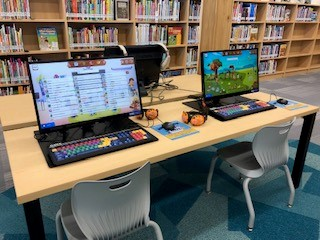
- Early Literacy and Teen Computer Stations: New computer stations were introduced to meet the growing demand for student online access, alongside early literacy machines for younger patrons.
- Patron Computer Stations: Additional stations for online card catalog access were installed.
- Staff Computers and Smart TVs: Outdated staff computers were replaced, and Smart TVs were added for engaging library programs and virtual education.
- WiFi Access Points and Printers: Additional access points and multifunctional printers were introduced to support video streaming and efficient staff operations.
2022-2023: Technology Reboot – Phase 2
Main Library Upgrades
Phase 2 continued the library’s technological advancements, aligning with the strategic plan (2022-2027) to maintain cutting-edge services:
- Touchscreen Card Catalog: A new card catalog was installed on the lower level to aid patrons in locating materials more easily.
- Staff Computers and Printers: Replacement of outdated staff computers and installation of multifunctional printers enhanced job satisfaction and productivity.
- Laptops for Patrons and Staff: The introduction of laptops for patron checkout and staff training further supported digital accessibility and professional development.
Youth Library Developments
The Youth Library focused on improving staff and patron technology:
- Touchscreen Card Catalog and Computer Replacements: A touchscreen card catalog was added, and staff computers were replaced to ensure efficient daily operations.
- Additional Printers and Laptops: New multifunctional printers and laptops were provided for staff use, particularly for early literacy programming and professional growth.
2024 Virtual Reality Robotic Kits
2024 VR Robotics Kits: Classroom sets of VR Robotics Kits have been implemented for programming across all ages, increasing engagement and educational opportunities.
2025-2026 Technology Reboot – Phase 3:
Main Library Upgrades
- This phase included replacing stand-up computers for patrons at the Main Library to complete the replacement cycle.
- Digital message boards to broadcast in-house the library programs, events, and services were installed on the 1st floor and lower level by the circulation desks
- Dual-screen monitors improving staff productivity and efficiency were installed at the Main Library.
- Older iPads were replaced with the latest technology with better performance and advanced storage capabilities for the Oral History Projects, with advancements in the camera for Facebook Live Streaming of programs.
- The grant funds supported the acquisition of an Epson Perfection V600 digital scanner for the Memory Lab space at the Main Library.
Youth Library Upgrades
- This phase included replacing student computers to complete the replacement cycle.
- Digital message boards to broadcast in-house the library programs, events, and services were installed by the circulation desk and in the teen area.
- Dual-screen monitors improving staff productivity and efficiency were installed at the Youth Library.
- Grant funds were used to purchase a replacement of one of the AWE Early Literacy Machines at the Youth Library with newer software and apps designed for the early literacy learners.
Future Plans and Technology Reboot – Phases 4 and Beyond
Looking ahead, the library planned to continue its technological evolution:
- The creation of the Memory Lab will entail the digital scanner, 8mm converter, and the VHS to DVD converter. This unique resource will help patrons or visitors convert their analog records, photographs, family history documents, videotapes, letters, and other materials into digital records.
- The creation of the Maker Space will provide access to equipment and resources intended to provide engaging, hands-on learning experiences. The Maker Space is a dedicated space for the exploration of a wide variety of cutting-edge and traditional equipment and tools, creating opportunities for discovery and self-directed learning, as well as classes and programs for guided exploration.
Through these enhancements, the Livingston County Library and Lillian DesMarias Youth Library are committed to providing cutting-edge technology and services, reaching new audiences, and equipping patrons with the tools they need in a digital age. Since 2022, the Missouri State Library has awarded millions of dollars in Technology Mini Grants to libraries across the state, supporting projects ranging from computer replacements to makerspace expansions. These projects are supported by the Institute of Museum and Library Services under the provisions of the Library Services and Technology Act as administered by the Missouri State Library, a division of the Office of the Secretary of State.